Ingredient profile
Green Coffee Bean Extract in SodaSlim: 130 mg and What the Research Shows
Each SodaSlim capsule lists 130 mg of green coffee bean extract, standardized to 50% chlorogenic acids, so about 65 mg. Trials used 180-200 mg a day and were poor quality (NIH ODS: green coffee bean extract) (Meta-analysis: green coffee (2011)). The best-known positive study was retracted in 2014 (Green coffee study retracted (2014)). The extract also has some caffeine of its own; the label does not print how much.
Written by the Sodaslimbalance editorial teamUpdated
The basics
What is green coffee bean extract?
Green coffee bean extract comes from coffee seeds that have not been roasted. SodaSlim uses the robusta species, Coffea robusta, and lists it first on the Supplement Facts panel.
The extract is marketed for weight because of its chlorogenic acids, a group of plant compounds found in coffee beans.
The label says the extract is standardized to 50% chlorogenic acids. That means half of the 130 mg, about 65 mg, is the compound people study. The other half is the rest of the bean material.
The extract is not caffeine-free. NIH's Office of Dietary Supplements notes that green coffee extract contains caffeine (NIH ODS: green coffee bean extract). The SodaSlim label does not print a caffeine figure for this line, so we cannot give you one.
| Label name | Green Coffee Bean Extract (Coffea robusta)(seed)(50% chlorogenic acids) |
|---|---|
| What it is | Coffea robusta (C. canephora), seed extract |
| Position on the label | 1st line on the label |
| Per 1-capsule serving | 130 mg (about 65 mg chlorogenic acids) |
| Amount used in research | 180-200 mg a day for 4-12 weeks in a few poor-quality trials |
| Strength of evidence | Poor quality; a key trial was retracted |
| Main use studied | Unroasted coffee bean extract sold for weight |
| Main caution | Contains some caffeine of its own; the amount is not printed. |
Dose check
How much green coffee is in one SodaSlim capsule?
One capsule holds 130 mg of green coffee bean extract. At one capsule a day, that is also your daily amount.
The human trials NIH describes used 180-200 mg a day for 4 to 12 weeks (NIH ODS: green coffee bean extract). So SodaSlim gives a little under three quarters of the low end of that range.
| Measure | SodaSlim, per day | Trials |
|---|---|---|
| Green coffee extract | 130 mg | 180-200 mg |
| Chlorogenic acids | About 65 mg (50% of 130 mg) | Not published in our sources |
| Trial length | 30 days per bottle | 4 to 12 weeks |
| Caffeine from the extract | Not published | Not published |
| Quality of the trials | No trial of SodaSlim published | Poor, high risk of bias |
A lower dose means you cannot borrow the trials' results. See the side-by-side for every ingredient on the SodaSlim Supplement Facts page.
The research
Does green coffee bean extract help with weight?
The evidence is weak. A 2011 review could only include 3 trials, and all of them were at high risk of bias (Meta-analysis: green coffee (2011)).
Pooled together, those trials showed about 2.47 kg (about 5.4 pounds) more loss than placebo (Meta-analysis: green coffee (2011)). The authors called the studies of "poor methodological quality." A small number on top of shaky studies is not a reliable result.
NIH's summary lands in the same place. It says only a few poor-quality human trials exist (NIH ODS: green coffee bean extract).
No published trial has tested SodaSlim itself. No trial in our sources shows green coffee extract works at 130 mg a day. The label's claim boxes carry an asterisk because the FDA has not evaluated them.
NCCIH puts the wider picture plainly. Of the weight-loss supplements it reviewed, none have been shown to be effective (NCCIH: weight control).
2012 to 2014
Why was the famous green coffee study retracted?
The best-known green coffee study, published in 2012 by Vinson and colleagues, was retracted in October 2014. The journal's notice says the sponsors "cannot assure the validity of the data" (Green coffee study retracted (2014)).
Once retracted, it no longer counts as evidence at all.
- 2011
A meta-analysis finds only 3 usable trials, all of poor quality (Meta-analysis: green coffee (2011)).
- 2012
The Vinson study appears and is widely promoted.
- September 2014
The FTC settles with the study's sponsor over altered data.
- October 2014
The journal retracts the 2012 study (Green coffee study retracted (2014)).
- January 2015
The FTC settles with a second marketer and describes the "Oz Effect."
The full story sits in our post on the green coffee study retraction.
Regulators
What did the FTC find about green coffee marketing?
The FTC brought two cases tied to green coffee weight claims. Both ended in settlements worth millions of dollars.
Applied Food Sciences, 2014
The company agreed to pay 3.5 million dollars. The FTC said the lead investigator repeatedly altered subjects' weights and the study length. Ads promised loss "without diet or exercise," though subjects were told to diet and exercise (FTC: green coffee maker settles (2014)).
Lindsey Duncan companies, 2015
The companies claimed users would lose 17 pounds and 16% body fat in 12 weeks without diet or exercise. They agreed to a 9 million dollar judgment and must back future weight claims with two well-controlled human trials (FTC: green coffee marketer settles (2015)).
The "Oz Effect"
An FTC blog post traces how the craze grew after a TV appearance. It points to undisclosed ties to the brand and paid "brand ambassadors" and reviewers (FTC blog: anatomy of a diet craze).
None of these cases involve SodaSlim. They matter because they show how green coffee hype was built. The FTC says health claims need competent and reliable science, generally controlled human trials (FTC: health claims need trials).
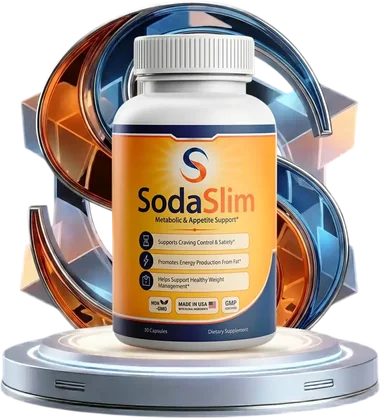
Give SodaSlim 60 days1 capsule a day · from $49 a bottle · free U.S. shipping on 3+ bottles
Order nowHidden extra
Does green coffee extract contain caffeine?
Yes, it contains some caffeine of its own (NIH ODS: green coffee bean extract). The SodaSlim label does not say how much comes from this extract.
That small unknown adds to 138 mg of caffeine anhydrous printed on the label. The green tea extract adds a little more. So the true total per capsule is somewhat above 138 mg, but no exact number is published.
- Count SodaSlim as at least 138 mg when you add up your coffee, tea and energy drinks.
- FDA cites 400 mg a day as a general amount for healthy adults (FDA: how much caffeine is too much).
- Want the exact figure? Ask the order desk at +1 (302) 200-3480 or email [email protected]; the label does not list it.
Our caffeine check for SodaSlim walks through the full math.
On the bottle
Where is green coffee listed on the SodaSlim label?
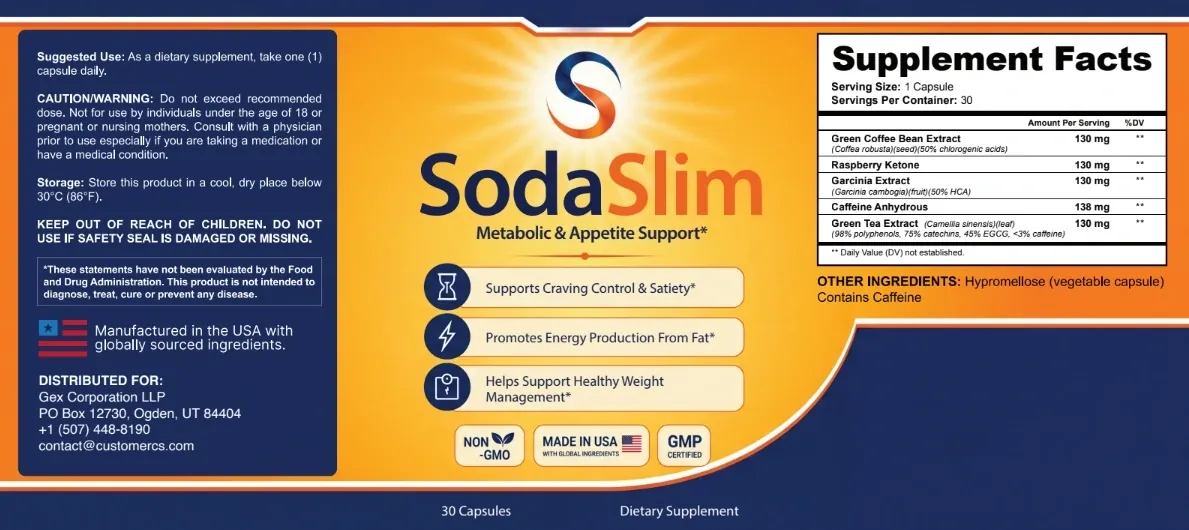
Green coffee bean extract is the first line of the Supplement Facts panel. It reads: Coffea robusta, seed, 50% chlorogenic acids, 130 mg.
That detail is a real strength: no proprietary blend hides the amount.
What the label leaves out is the caffeine from this extract and where the beans were grown. It says only "Manufactured in the USA with globally sourced ingredients."
Look at every line, with notes, in the full label breakdown.
Our view
Is green coffee bean extract worth it in SodaSlim?
Treat it as a minor ingredient with weak support. The label is honest about the amount, but the science behind the ingredient is thin.
Fair points
- The amount, 130 mg, is printed plainly.
- The strength, 50% chlorogenic acids, is printed too.
- The species and plant part are named.
Weak points
- Below the 180-200 mg used in trials.
- Those trials were few and poor quality.
- The landmark study was retracted.
- Its own caffeine amount is not printed.
If weight is your goal, CDC notes that a steady 1 to 2 pounds a week is more likely to last (CDC: losing weight). Our healthy weight guide covers the habits that matter most.
FAQ
Green coffee bean extract in SodaSlim FAQ
How much green coffee bean extract is in SodaSlim?
Each capsule lists 130 mg of green coffee bean extract from Coffea robusta seeds. It is standardized to 50% chlorogenic acids, which works out to about 65 mg. At the label dose of one capsule daily, 130 mg is your full daily amount.
What dose of green coffee extract was used in studies?
Human trials summarized by NIH used 180-200 mg a day for 4 to 12 weeks (NIH ODS: green coffee bean extract). SodaSlim's 130 mg is below that range. Those trials were also few and of poor quality, so even the studied dose has weak support.
Was the green coffee bean study retracted?
Yes. The 2012 study by Vinson and colleagues was retracted in October 2014 because the sponsors could not assure the validity of the data (Green coffee study retracted (2014)). It should not be used as evidence for any green coffee product, SodaSlim included.
Does green coffee bean extract have caffeine?
Yes, it contains some caffeine, according to NIH (NIH ODS: green coffee bean extract). The SodaSlim label does not print how much comes from this extract. Count each capsule as at least 138 mg of caffeine, the amount of caffeine anhydrous listed on the label.
How much weight did people lose with green coffee extract in trials?
A 2011 review pooled 3 trials and found about 2.47 kg more loss than placebo (Meta-analysis: green coffee (2011)). All three were at high risk of bias, and the authors called them poor quality. That figure is not a reliable estimate, and none of it was tested on SodaSlim.
Why did the FTC act against green coffee sellers?
In 2014 the FTC said a study's data had been altered, and the sponsor paid 3.5 million dollars. In 2015 a marketer agreed to a 9 million dollar judgment over no-diet, no-exercise claims (FTC blog: anatomy of a diet craze). Neither case involves SodaSlim.
Who wrote this
Written and reviewed by
A small team that reads the SodaSlim label line by line, checks every number against public health sources (NIH ODS, NCCIH, LiverTox, EFSA, CDC, NIDDK, FDA, FTC) and rewrites it in plain English. We do not write for the manufacturer, and we update a page whenever the label, the prices or the evidence changes.
Last updated . See our editorial standards and how we check reviews. This website is run by a USA authorized retailer, not by the manufacturer. We are paid a commission when you buy through our order links.
Keep reading
More about SodaSlim
Ingredients
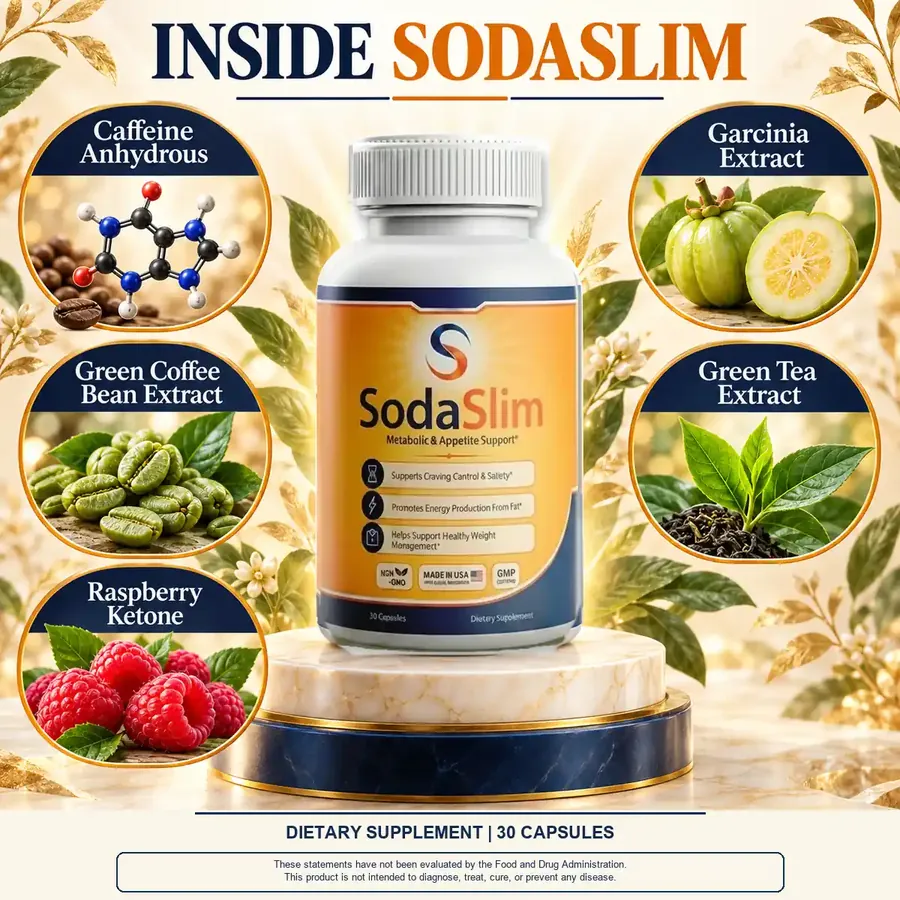
Five ingredients, five printed amounts: what each one is, the dose studied, and how strong the evidence really is.
Read more
Caffeine in SodaSlim
A cup-by-cup budget for SodaSlim's 138 mg of caffeine, plus sleep timing and what to do if you feel jittery.
Read more
Green coffee study retraction
A 2012 study, a TV craze, two FTC cases and a retraction: the green coffee story and what it means for SodaSlim.
Read moreUSA authorized SodaSlim retailer
Ready to try SodaSlim?
Pick a pack. At one capsule a day, every pack lasts at least 60 days, the whole money-back window.
- Secure checkout
- 60-day money-back guarantee
- Ships from the U.S.